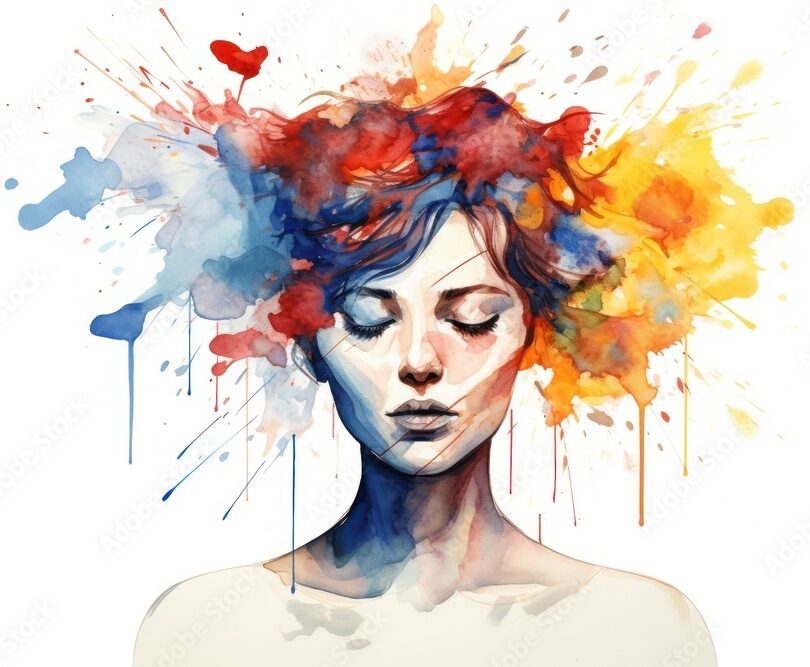
The Audacity to Choose Love
In a world with such deep divisions, choosing love feels like an act of defiance. The courage to break with groupthink, express independent views, and move through the world in a state of love also comes with judgment. How can we be so audacious as to refuse the chorus of hate and, instead, step into peace, compassion, and non-judgment? Believing that by embodying love, even in the smallest interactions, we can make someone feel accepted, worthy, and seen.
"Love is a force more formidable than any other. It is invisible - it cannot be seen or measured, yet it is powerful enough to transform you in a moment, and offer you more joy than any material possession could." -Dr. Barbara De Angelis
Sounds ideal, but there is tension: how do you choose love when your heart aches from all the suffering you see in the world? How do you open to compassion when the world feels so cruel? And perhaps the hardest of all, how do you show love toward something or someone you vehemently disagree with?
When your heart feels heavy, it is difficult to imagine love as the answer. How do you feel the weight of the moment and not wonder how it’s possible to hold on to anything positive in the middle of so much pain?
Your Invitation to Think Differently
What if love isn’t naïve at all, but a radical reframing? What transformations will be seen in our lives and ripple outward when one person dares to show up in love? What might change in our communities if we dared to “be love”? American scholar, writer, and activist bell hooks once reminded us that “all the great movements for social justice in our society have strongly emphasized a love ethic.” Maybe movements fueled by love will be stronger and more enduring.
Start with Self-Love
Self-love is a rebellious act in a world that controls and profits from shame, fear, division, and exhaustion. Love that restores the individual means replenishing so we can show up stronger, stand up for goodness for longer, and act with more compassion for everyone.
"Self-love is the foundation of our loving practice. Without it, our other efforts to love fail." -bell hooks
Tending to our mental, spiritual, and physical health isn’t indulgence; it is a critical aspect of human well-being that influences our thoughts, emotions, and our ability to relate to others, make choices, handle stress, and meet life’s challenges. The World Health Organization defines mental health as the state that enables people “to cope with the stresses of life, realize their abilities, learn well and work well, and contribute to their community,” emphasizing that mental wellness underpins decision-making, relationships, and how we shape the world (World Health Organization, 2025). With how deeply an individual’s wellness influences everyday life, from small decisions to the relationships we build, it makes sense that we tend to it with intention.
Cultivating a compassionate internal voice, a form of self-love, allows us to counteract internal self-critical voices and reduce negative emotions and psychopathology (Wakelin et al., 2022). Compassion is the sensitivity, awareness, and kindness to suffering in ourselves and in others, paired with a genuine commitment to alleviate it (Millard et al., 2023; Jenkins et al., 2023). When we practice compassion, we restore humanity in places where it has been diminished or denied (Millard et al., 2023; Jenkins et al., 2023). We can powerfully counteract dehumanization, the process of seeing ourselves or others as less than fully human. Self-love equips us to extend authentic, sustainable love outward and show up with courage and resilience.
The Weight of the World: Hurt, Hate, and Mental Health
We don’t need charts to feel deeply that humanity is in crisis. The numbers really are staggering: nearly 1 in 7 people globally live with a mental disorder (World Health Organization, 2025). The endless cycles of pain are everywhere, overwhelming us. You might have even felt the spiral of asking, “What’s the point of even trying?” Perhaps love is the one thing that interrupts that downward pull, turning despair into a spark of possibility?
Love Heals Wounds, Dissolves Hate, Protects from Despair, and Sustains Movements
Science has demonstrated that feelings of love change our state. Exploration of the underlying brain and nervous system mechanisms of compassion reveals multiple healing pathways that can be activated by mind-body practices (Gerbarg et al., 2019). These pathways affect physical health, emotional regulation, and how we perceive and relate to others. Physiological states affect our capacities for connection, self-regulation, healing, and responding to people and situations with empathy, compassion, and understanding (Gerbarg et al., 2019).
If love is partly a state of safety in the nervous system, then practices that cultivate safety make love more accessible. Mind-body practice can balance, strengthen, and increase the adaptive flexibility of stress response systems, potentially counteracting the detrimental effects of excess stress, neglect, abuse, wars, disasters, political upheaval, and other trauma on emotion regulation, physical health, and the ability to experience love and compassion.
Practices such as meditation or breathwork support self-love and suit individual needs and preferences, helping us transition from fear to safety, from isolation to connection, and from despair to resilience. Loving oneself is a radical refusal to internalize dehumanization. The restoration of self enables individuals to show up for others and participate in community with empathy and creativity.
What positive impact and change might you see if you chose love as your starting point?
Healing Ourselves to Heal Communities
In a world so saturated with hurt, hate, and despair, it may seem almost naïve to believe that love could make a difference. Yet we find evidence to suggest otherwise, from neuroscience to psychology to social justice movements. Love interrupts the cycle that keeps hate alive; it is strength and sustenance, and not selfish or sentimental.
When we love ourselves, we begin to heal from the fractures of trauma and stress. When we are internally regulated, self-worthy, and self-trusting, decisions become clearer, not because uncertainty disappears, but because we are no longer divided within ourselves. We can show up for others with courage and compassion, leading with something bigger than the self. The ripple effects can be seen in healthier families, more resilient communities, and stronger collective action. A healthy love of self can then choose love for others and counteract the forces of hate that dehumanize and divide. Choose love to restore humanity rather than succumb to the hate that seeks to erase it.
When love expands from self to community, it sustains the long, difficult work of confronting the world's pain with the only force strong enough to transform it. Neuroscience confirms that self-love practices increase empathy, cooperation, and resilience. History shows that the most powerful social movements were sustained by love, not driven by the outrage that often collapses into burnout.
An Audacious Act
What will be your audacious act of love today? Commit to a practice of self-love and then extend it outward. Know that each act of love, as small as it may seem, is part of a much larger movement the world is aching for. Dare to be defiant in a world of fear, judgment, and hate. Choose to live and act from a state of love.
Illuminate yourself, your heart, and your wisdom.
♥ Shauna
De Angelis, B. (1992). Real moments. Dell Publishing. → Get Here
Gerbarg PL, Brown RP, Streeter CC, Katzman M, Vermani M. Breath Practices for Survivor and Caregiver Stress, Depression, and Post-traumatic Stress Disorder: Connection, Co-regulation, Compassion. OBM Integrative and Complementary Medicine 2019; 4(3): 045; doi:10.21926/obm.icm. 1903045. → Read here
hooks, b. (2000). All about love: New visions. William Morrow. → Get Here
Tom A Jenkins, Morgan Robison, Thomas E Joiner. Dehumanization and mental health: clinical implications and future directions. Current Opinion in Behavioral Sciences. Volume 50, 2023, 101257, ISSN 2352-1546. → Read here
L.A. Millard, M.W. Wan, D.M. Smith, A. Wittkowski. The effectiveness of compassion focused therapy with clinical populations: A systematic review and meta-analysis, Journal of Affective Disorders, Volume 326, 2023, Pages 168-192, ISSN 0165-0327. → Read here
Wakelin, K. E., Perman, G., & Simonds, L. M. (2022). Effectiveness of self-compassion-related interventions for reducing self-criticism: A systematic review and meta-analysis. Clinical Psychology & Psychotherapy, 29(1), 1–25. → Read here
World Health Organization. (2025, September 30). Mental disorders: Key facts and information. World Health Organization. → Read here
World Health Organization. (2025, September 30). Mental health — strengthening our response. World Health Organization. → Read here
Resources & Affiliate Links
I love @ToBeMagnetic. I’ve been a Pathway member with them for 2 years, and have been recommending them to anyone who’s open to give meditation a try. Here’s my referral code so you can get 15% off a membership and I'll receive a commission! *I’m not on the TBM team, just a passionate member
Code: SHAUNA
Disclaimer
This blog explores the intersection of science and spirituality across our LIVES pillars — Love, Intuition, Values, Energy, and Surrender. We'd love to hear your thoughts at hello@bowyliss.com!
Disclaimer - This blog is intended for educational and informational purposes only and does not provide mental health or spiritual advice. If you have questions about your specific situation, please consult a professional licensed to practice in your state.